

28 Years Later was a departure from the 28 Days Later franchise in that it’s less about the immediate threat of those infected with the Rage Virus and more about building structure and peace in a society that has been dismantled by the infection. The film mostly avoided the typical zombie scare tactics of its two predecessors and instead favored more a introspective coming-of-age story, resulting in a less intense but thematically richer horror film. 28 Years Later: The Bone Temple continues that formula as it further explores the differences and similarities between humans and infected. It might not be for everyone, especially for zombie fans looking for the same chaotic horror of the first two films. The Bone Temple is a slow burn that cuts to the bone, expanding the mythos while delivering one of the most insane set pieces the franchise has ever seen.
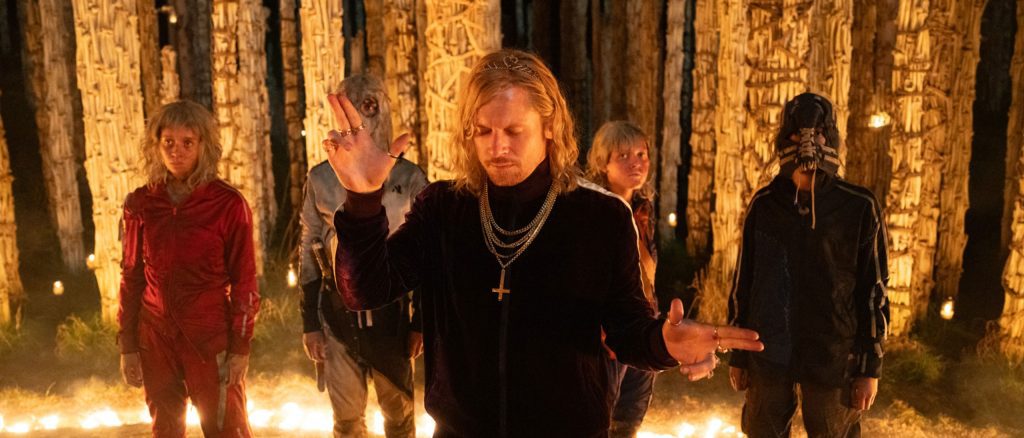
Filmed back-to-back with last year’s 28 Years Later, The Bone Temple continues moments from where the previous film ended with Spike (Alfie Williams) encountering the outlandish Teletubbies-inspired gang of Satan worshipers, led by Sir Lord Jimmy Crystal (Jack O’Connell). Following a kill or be killed initiation ceremony, Spike finds himself a reluctant member of the gang. Meanwhile, Dr. Kelson (Ralph Fiennes) runs experiments on his newfound friend Samson, the Alpha leader who shows signs of increased intelligence over the other infected. He puts himself in direct risk of getting his head ripped from his body, but he believes it to be worth it if he can discover a way to reach what little humanity is left behind those rage-fueled eyes. Despite living among the infected for nearly three decades, surviving this world is still as dangerous as ever.
28 Years Later: The Bone Temple is the second film in a newly planned trilogy with Nia DaCosta taking over the director reins from Danny Boyle and bringing a more cinematic feel to the story as opposed to Boyle’s more down in the dirt approach of its predecessor. Despite jumping straight into things from where the first film ended, The Bone Temple gets off to a slow start. I was excited to see what was in store for Spike when he left his secluded island community to explore the mainland, but it’s more of the same. Aside from Dr. Kelson’s terrifying memento mori titular bone temple, it’s much of the same wooded forests with the occasional homestead. We do see how Sir Jimmy leads his gang of psychopathic killers. They all are forced to abandon their old names and are renamed Jimmy, becoming his fingers as they dole out “charity” to any humans they come across. “Charity” is just their fancy word for torture, and boy are they good at it. Spike is terrified by their actions, and he doesn’t dare cross them but he can only tag along with them for so long before he’s going to have to participate. Alfie Williams isn’t as prevalent as he was in 28 Years Later as the main focus shifts between Sir Jimmy and Dr. Kelson, which is a bit of a shame since he was so great in the first film.
The most interesting thing about the film revolves around Dr. Kelson and Samson. Whenever Samson gets too close, Dr. Kelson hits him with a drug-tipped blow dart that essentially gets him high and calms him down. It’s during these moments that Dr. Kelson notices Samson act more like a human and less like an infected. It’s nothing big, but it makes Dr. Kelson question whether or not a cure might be possible. Zombies are so often seen as mindless monsters controlled by this naturalistic urge to feast on human flesh. And a character either kills them or is killed by them. It’s all very basic. 28 Years Later: The Bone Temple shows there are possibilities beyond that. It’s fascinating to watch the trial and error approach Dr. Kelson applies to studying Samson and seeing the hulking Alpha leader evolve into something more complex. His storyline carries the majority of the film and injects some human curiosity into an otherwise standard zombie apocalypse survival story.
A lot of that has to do with just how good Ralph Fiennes is in the role and how he fully commits to it. He can be quiet and contemplative in one scene as he reflects on the implications of a cure, and he can be wild and over-the-top like in his interactions with Sir Jimmy. I won’t spoil anything, but the highlight of the film comes when the storylines cross and Sir Jimmy visits the bone temple looking for guidance from “Old Nick.” It’s an absolutely heart pounding scene that showcases all the talent The Bone Temple has to offer. The acting, directing, sound design, and cinematography are all top notch. Even though it’s still only January, I am confident in saying that this scene will go down as one of the best of the year. I just wish the rest of the film was on the same level.
In both 28 Days Later and 28 Weeks Later it was clear that the infected were the biggest threat to society. The 28 Years Later films show that humans are the biggest threat to each other when that society has fallen. The Bone Temple follows the same deeper themes that 28 Years Later explored so if you were not a fan of the slower pace and more intricate musings of last year’s film, then you’re likely not going to be swayed by The Bone Temple. It’s clear that the franchise has evolved from its zombie origins, and I’m excited to see how much further creator and writer Alex Garland can push its ideas. The zombie genre has never felt so alive.
-
28 Years Later: The Bone Temple
Summary
28 Years Later: The Bone Temple might not be for everyone, especially for zombie fans looking for the same chaotic horror of the first two films. It’s s a slow burn that cuts to the bone, expanding the mythos while delivering one of the most insane set pieces the franchise has ever seen.