


Just a few weeks ago Ric Roma Waugh’s Greenland 2: Migration hit theaters with longtime collaborator Gerard Butler, and now here comes another action film with Shelter starring Jason Statham. Shakefire sat down with the director to talk about the film and working with Jason Statham for the first time. Statham plays Michael Mason, a former government black ops assassin who has gone into hiding on a lighthouse island but is discovered and hunted down when he saves a young girl, played by Bodhi Rae Breathnach, from drowning at sea. Waugh discusses with us at length about capturing the kinetic energy of the film’s intense sequences, and how Shelter stands out from your typical action film.
Shakefire: So, you’ve already had a busy month. You got two movies out already this year and it’s only January. What’s it like promoting two movies at the same time?
Ric Roman Waugh: I mean, it’s a great problem to have, right? But they’re very different films and different points in my life of accomplishments. Greenland, the first movie; we never thought we were making a second movie, and especially trying to release that movie in the middle of the pandemic. Like, it was crazy, you know? I love that story and love that journey for sure. It completed a chapter for me of the Garrity family and what I wanted to do with that whole way of watching two movies simultaneously and watching the saga of the family. And then there’s this new, fresh thing we just did with Shelter that I’m super excited about. So it’s weird for me because it’s 1. It’s kind of the completion of something, and then now a beginning even though I don’t look at Shelter as a franchise, I always just try to make one movie and put everything I have into the movie I’m making. There’s just an electric part of this movie that I love where I’m always looking for action films that are rooted in deep emotion. When Jason sent me this script that he was just super passionate about, I got it. It hit me in the gut, and I went, “I’m all in.” This one’s been a really, really great kind of labor of love, and the other one’s the completion of it, you know?
You talk about the emotional background of this, and the dynamic between the two leads here. We’ve seen that a lot in media with this older guy, younger girl, and the training that goes on. We’ve seen it with The Last of Us, Logan, True Grit; all these iconic films and series. What do you think it is about that dynamic specifically that attracts the action genre?
It goes back to movies like Shane from the 1950s, where you have the gunman, the anti-hero, the guy that we’re supposed to be afraid of but actually befriends us and takes care of us and protects us. What child doesn’t want to be protected? So I love that. I love that aspect. When I read this, the movies that it really kind of felt like to me was Man on Fire, where you have two damaged souls that are dealing with their own sense of trauma, dealing with their own form of exile, and The Professional; where a man living in isolation is a Hitman and sees a child who’s dealing with their own traumatic experience, and then they find family in one another. That was the root of what I loved about this. It’s two lost souls that find one another. Here he saves a young girl from the sea and then only to find out that she’s really probably there to save him. I love that story. So when you can take those types of paradigms and intimate story lines, and then wrap them in a big action picture, I’m just not a fan, let alone want to direct one, where there are action movies for just the sake of action, because it feels like our eyes glaze over. Doesn’t matter how many hundreds of millions of dollars we throw at it, I’d rather have something that has that character driven piece to it. It’s why we go to the movies, right? To escape somewhere and live through people.
One of the things that I really enjoyed about this film was that it doesn’t open up with some huge action sequence. We get to spend some time alone on the island with these two characters and see them develop before it jumps to the chaos. What was your process planning your shoot around that?
It was one of my favorite things about the material. We live in a clickbait society now, especially because of streaming, where they’re looking to hook everybody in the first three minutes. So then what you do is you get this massive plot dump. You know who the character is, you know the whole movie, and you’ve barely got out of the gates. It’s not how we really did traditional storytelling. Take Man on Fire. Look how much of a slow burn Man on Fire is, and you grab into it. What I loved about this is the same thing. It allows you to understand who these characters are, still give you action – the storm sequence is very big, and it’s in the first 10 minutes of the movie – but again, there’s an unfolding of the mystery of these two people that allows you the time to digest who they are, appreciate them, have empathy for them, so now when you’re in the action with them, you’re feeling what they’re feeling and you’re rooting for them and hoping they stay together versus seeing so much stuff go on right off the bat that you have no connection to it.
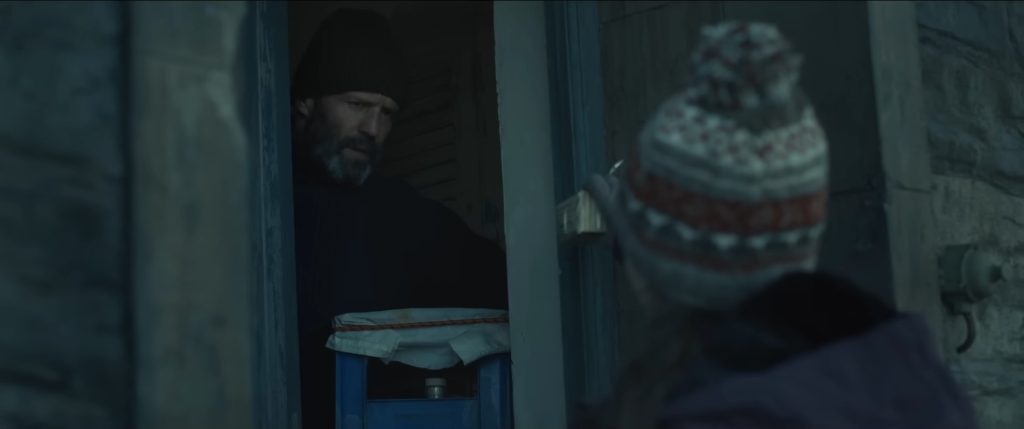
Speaking of feeling with it, I feel like you did one of the cardinal sins of film; you killed the dog. Was that always the plan? Are you ready for the backlash?
Personally, I’m a dog lover, and I love animals. It is this weird thing of how many human beings you can punish in a movie, but if the dog gets it we’re all in trouble. But the truth is, if you look at my movies I don’t really pull punches. I try to keep things very truthful and honest. I am a softy at heart, so hopefully we’re giving you a smile on your face. But in the material Jack always had gotten killed, and what made it even worse is that Jack was nearly a human being, because it was the only other soul that he had for all those years. So, yeah, there’s these things that you try not to water down or fall into the pitfalls for me at least of, “God, the audience is not gonna like it, so we better not do it.” No, I want to be as honest to a story as I possibly can.
And it sets up right off the bat that you’re gonna root for him. It’s like, “oh, these government officials killed the dog. They’re automatically the bad guys.”
Hey, the John Wick franchise started out with offing the dog.
I can see the inspirations. I can see the John Wick. I can see the Jason Bourne. I can see all those different elements in this film. What were your Inspirations for creating this and and how do you see the action genre itself evolving?
We live in such a plethora of things now that it’s pretty hard not to make anything original, and people not say it’s associated with certain things, but I actually think that’s a great thing if we’re bringing up association, the Man on Fires and the different things. But for me, I’m always trying to be as original to who I am as a storyteller. Tony Scott was my mentor and what I loved about Tony’s films is he lived or died by his own sword. He didn’t try to emulate others. It didn’t mean that there might be comparisons or things that could feel like they were a part of another film, but being around him, I knew he was always doing things in an audacious and honest way of how he was as a storyteller. I hope I’m doing an ounce of that. I hope I’m doing everything I can to give you what my brand is and what I am as a filmmaker, and if there’s comparisons in it, and especially if they’re other great movies, I’ll take them.
One of your quotes that stands out and I love is, “You can’t fake kinetic energy.” That’s so vital to the action genre. How did you make sure that you were capturing the kinetic energy of this film and make sure that what was going on in these action sequences comes out not just in the moment, but for audiences down the line, after editing, after adding the little visual effects? How did you ensure that that kinetic energy was kept?
I’ve come from the stunt world and a lot of my peers that are directing now I find a lot of times they’re looking at how to do a stunt better than ever done before or the new way to film it that’s going to be completely different and exciting. And I love that. I have a really different point of view about action. When people used to ask me about what it was like to do stunts, for me, what I thought they were really trying to ask me is, “What did it feel like to be set on fire? What was that fear? What was the exhilaration going 200 miles an hour? What was it like to fall off a building and actually let it happen?” And so I’m trying to always give a sense of emotion to action and a sense of feeling, so that you feel like you’re in an IMAX ride where you feel like you’re in it. So like in the car chase in this movie, like you are in that car dealing with it. Well, it’s also what gives you emotion is energy, right? Everything about us is energy, so it’s about what is that kinetic motion that you just can’t replicate in a fake way. It means you have to do it for real. And so like those cars going up and down that hill, and the way that the camera is literally shaking where the lens can’t even keep up with it. That’s all in camera happening for real. When Jason is rescued swimming Bodhi in the middle of those turbulent waves and so forth, he’s really rescue swimming her. To see that energy going over a child with water, you can’t do that in CG. It has to be done real.
How do you find that limit? Because obviously there’s some stuff that is just way too dangerous to do. Where do you find that limit?
Yeah, my job is to make sure that I’m giving you as much as I got, but also making sure everybody goes home at the end of the day. So there is a fine line that you try to push everything to the nth degree. But when you’ve been around the business as long as I have and come from when everything was done for real because there were no visual effects. We were really doing things, and we’re back to that, which I love. So there’s that experience that I have, but it’s also being smart enough to know I’m going to put a lot of top professionals around me that I know have that same mantra I have, where we’re all going to bring our wares to the table and do stuff in a very elevated way and bring as much as we possibly can, even around a 13-year-old child and putting her in this and these really dangerous situations, but knowing that when we yell cut she’s going to have a smile on her face and that we’re going to make sure everybody goes home at night and is safe. And that’s not only just the people in front of the camera. It’s the camera teams. It’s everybody around us. We’re very conscientious of everybody’s safety.
You got the action scenes, but then you also got these really good, heartfelt moments between Bodhi and Jason. How did you find that balance?
Well, 1. It was in Ward Perry’s script. But it’s a very organic thing for me, because I’m not going to start any action sequence until I’ve built an emotionally driven reason to do it. If you look at my movies, hopefully I’m never servicing plot by the action. I’m servicing the character’s emotional journey when the plot twists or something changes or they were they’re put into a very dangerous position or extraordinary – I always say my movies are ordinary people under extraordinary circumstances – so I’m always trying to put them in those circumstances, but it’s a build up to that, so that when I feel like there’s an emotional connection, at least me as a reader, reading a script, and then when I’m doing it in the narrative, by the time I put you in that car, by the time I put you in that fight, by the time I put you into the middle of the nightclub, I’ve built you into a way that you’re connected with the characters. So now you’re living the moment through them and what the character is feeling versus just watching the action.
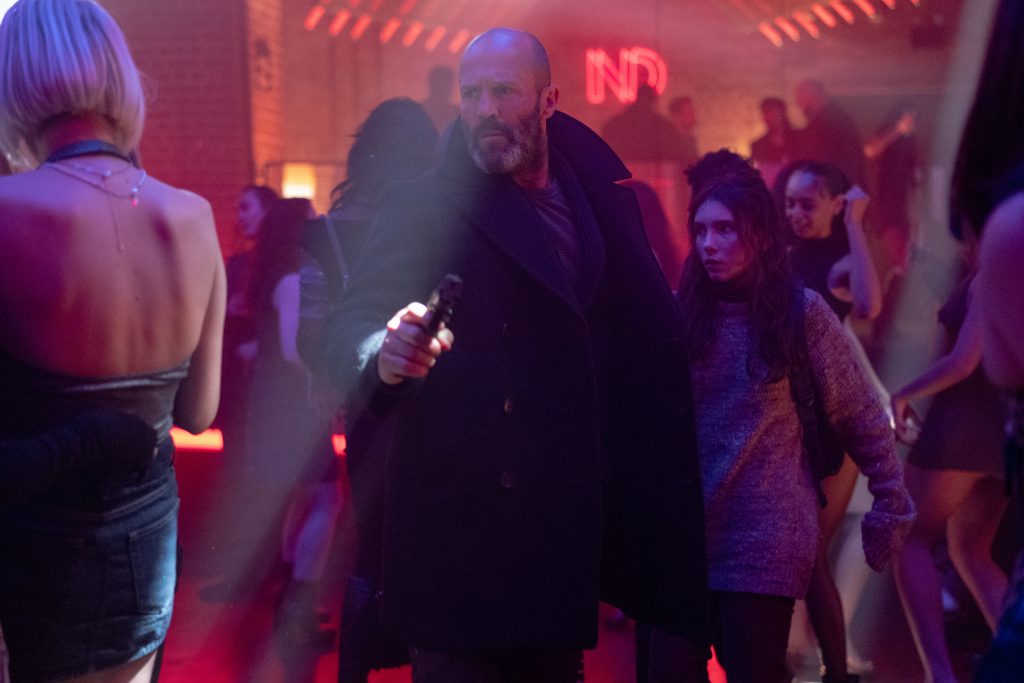
What was the most exciting sequence to film for this? Was it the car chase sequence? Was it the nightclub? Was it the boat rescue?
They all had their different things. The rescue was a pretty big deal because it was done in real inclement weather in real situations. And knowing that Jason is an extraordinary athlete, but we’re still dealing with a kid. We’re dealing with a 13-year-old girl, who we put in a lot of training. There was a lot of safety around her, but she still had to do it for real. Not only is he rescue swimming her, but she’s the one that has to play unconscious like a ragdoll and let waves crash over her and so forth and act like she’s not breathing. So my hat’s off to her as much as it is to Jason in those moments, but there’s always this sense of confidence that I had because of who he is. In the fights, the fights look real because they are real. They’re really going at it. He and Bryan, who played Workman. When you get into those kinds of areas of having an action star that is authentic in his real life and keeps himself in that shape and is a martial artist and is a fighter and is a person of action, then you get to bring that authenticity in very different ways. It’s what we loved about the Bruce Lee’s coming across, Steve McQueen back in the day of doing his own car chases and his motorcycle work, Jason has a natural ability in himself and he also lives by a code. I love that those things carry forth in his characters.
Are you going to be working with Jason moving forward more? Because you have a lot of collaborations and keep the same teams across your films.
Yeah, if he’s ready to go down again, I am in a heartbeat. I absolutely love the guy. Again, he’s as authentic as they come. He’s so respectful to everybody around him. He comes to work ready to kill it every day. That’s the one kind of anxiety point you get with Jason is that you better bring your A game and you better be at that level of energy, because he’s not showing up moping on set, he’s ready. He’s ready to rock, and I love that. So there’s a challenge every day about raising the bar and the fact that he’s also a preparation freak like me so that we’re not getting to set and not doing exactly how we want to do it. We’ve put it at a level that it already plays really well. So then all you’re doing is raising the bar from there. You’re not trying to figure it out. He and I are both of the build that we don’t like to wing it or figure it out on set. We want to not belabor it to death, but we want everything to be elevated in the moment where you can really get out there and then make it shine.
So is everything then very methodical in your approach? Is there not a lot of improv or in the moment?
No, it’s a really good question. I’m not 100% locked down methodically. What I like is a very well prepped movie. And the same thing goes with my scripts. Whenever I’m writing, I always tell the actors, and I mean it, that I only feel the characters are 80% there. Bring that 20%. Make them your own. What is it that is attracting you to the DNA? What’s the skin that they wear? And so we do that the same way on set. I bring all my weapons. I bring all the people that I need. I know how I’m going to shoot it, but I’m not like, “oh, that frame was right here, and then I have this one over here.” The more you work, the more confidence you get to let things be more improvisational. And that’s a very fancy word of just saying, “just let things happen.” That’s the great thing. They always say like, “how many takes do you do?” I don’t do more than five takes, because if it hasn’t found itself in the first couple takes, something’s not working and then we’ll talk about it. How do we reshape the scene? What’s not clicking in this moment? Ah, that’s what it is. And then you get into it, and you find that magic and you’re there.
What was that 20%, that little extra something, that Jason brought to this role that you hadn’t thought of?
It’s when in the performances, it’s knowing that two people like Jason and Bodhi had unbelievable and undeniable chemistry, is to say, “don’t follow the words. Feel them. And if something comes out of that and it goes somewhere else, roll with it.” And we’re the same kind of way with action, which you have to be a lot more careful about because you’re talking about safety, but those little moments in between, or those things that the nuance that you didn’t think would happen, well I’ll give you an analogy. I always say I write a movie. And even like this kind of a movie where I didn’t write the original script, but then I’m very hands-on in the director’s pass with the screenwriter, and then I shoot it, and then I rewrite the movie again. And the reason is because there’s all these things that happen during the filming process that isn’t exactly like the script. Look at you and I talking right now, there might have been things that we scripted this whole conversation, but these nuanced moments happened that we never thought about that suddenly becomes this beautiful piece of magic. Billy Goldenberg, William Goldenberg, is an editor that did everything from like all the early Michael Mann movies, and we’ve been very close friends for a long time. He always talked about movies like The Insider and how it was the B camera that most of that movie was cut with. What he’s saying is it’s not the camera that you thought it was. It was those off-camera moments, those weird kind of unscripted moments, that suddenly give you character. And that’s what I love about this. I build the dance floor, I don’t block actors, and just go do it, go dance.
Shelter is now playing in theaters nationwide. Be sure to check out our review of the film as well.